More Than a Market: Why the Indian Grocery Store in Your Suburb Is Actually the Heart of the Community
The Aisle That Doesn't Exist on Amazon
Walk into any Indian grocery store in suburban America on a Saturday morning and you'll find a specific kind of organized chaos. Carts piled with giant bags of basmati rice. A freezer section stocked with parathas and samosa packs from three different brands. Aunties comparing the freshness of curry leaves with the seriousness of a produce sommelier. A teenager at the register who clearly knows half the customers by name.
This is not a shopping experience you can replicate with a Prime membership and two-day delivery. And a growing number of Indian-Americans — both those who've been shopping at these stores for decades and younger diaspora members who are discovering them for the first time — are paying attention to just how much these spaces do that pure e-commerce can't.
The Geography of Desi Grocery
The spread of Indian grocery stores across suburban America roughly tracks the history of South Asian immigration itself. Early clusters appeared in cities with large tech and academic corridors — the Bay Area, New Jersey, Chicago's northwest suburbs, Houston's southwest side, the Research Triangle in North Carolina. Over time, as the community dispersed and second-generation families settled in smaller cities and outer suburbs, the stores followed.
Today you'll find Indian grocery stores in places that would have seemed unlikely twenty years ago: Boise, Idaho. Columbus, Ohio. Bentonville, Arkansas. Suburban Phoenix. They're not always big. Sometimes it's a single room with narrow aisles and a handwritten sign above the spice section. But they're there, and for the families nearby, they're essential.
What's interesting is that many of the newer stores aren't just Indian — they're pan-South Asian, sometimes pan-Asian, often pan-immigrant. You'll find Pakistani brands next to Indian ones, Sri Lankan coconut products near the Goan fish curry paste, Bangladeshi mustard oil on the same shelf as Punjabi ghee. The category is expanding to reflect the actual complexity of the communities these stores serve.
What These Stores Actually Sell (Beyond the Obvious)
Yes, you can get your atta, your toor dal, your MTR ready-to-eat pouches, and your fresh green chilies. But the inventory at a good Indian grocery store is a kind of cultural document.
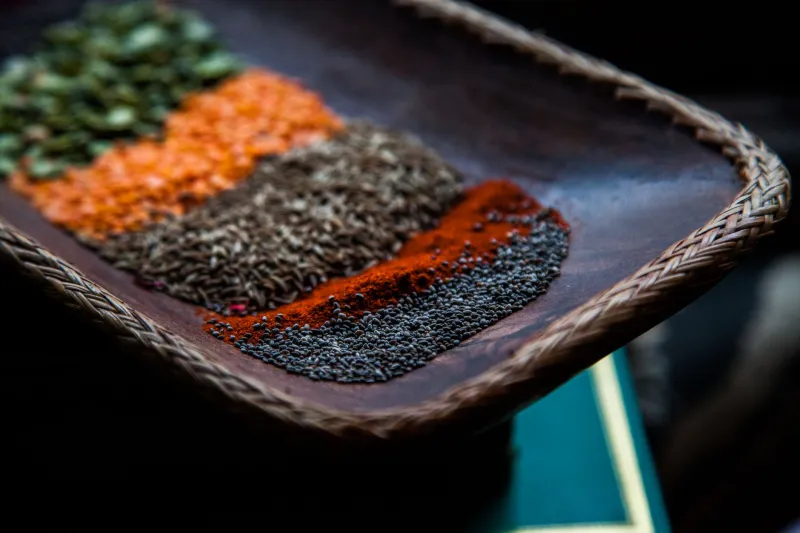
Think about what's in there: fresh curry leaves that you genuinely cannot get at Whole Foods no matter how hard you look. Specific regional brands — Aachi masalas for Tamil households, Everest spices for Gujarati and Maharashtrian families, MDH for North Indian cooking — that represent real taste preferences, not just generic "Indian spice." Fresh produce that matters to South Asian cooking: bitter gourd, drumstick, raw banana, tindora, fresh methi. Puja supplies — agarbatti, kumkum, coconut, camphor — so you don't have to place a separate order and wait a week before a fast or festival.
Then there's the frozen section, which for many diaspora households is basically a lifeline: frozen idli batter, ready-to-cook dosa mix, stuffed parathas, frozen samosas for last-minute guests, mithai that travels reasonably well.
And the snack aisle. Every Indian grocery store has a snack aisle that functions as a greatest hits compilation of every road trip, train journey, and after-school moment from your childhood in India, or your parents' stories about their childhood in India.
The Owner Behind the Counter
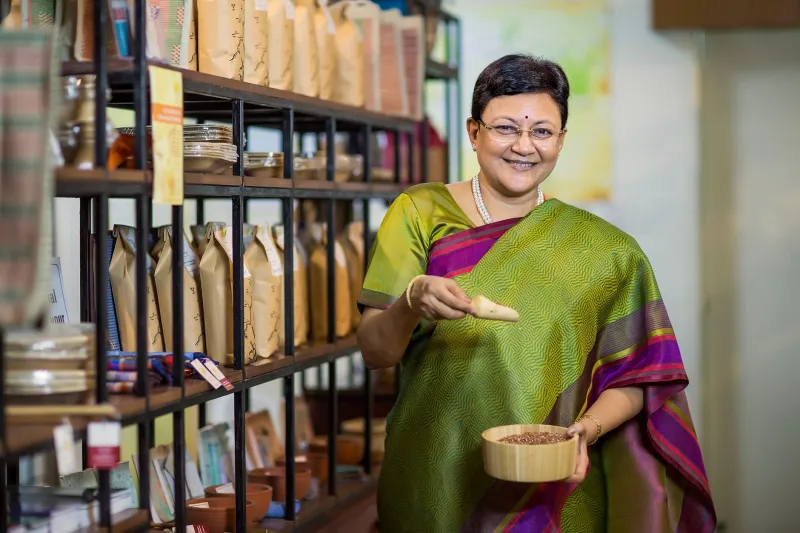
Many of these stores are family-run businesses, often started by first-generation immigrants who spotted a gap in their community and filled it. The stories tend to follow a similar arc: someone arrived in the US, struggled to find the ingredients they needed to cook the food they grew up eating, and eventually decided to solve the problem themselves.
These owners are often more than retailers — they're informal community hubs. They know which brands are trusted, which new products are worth trying, and which ones are just riding a marketing wave. They know when a local family is going through a hard time and might quietly extend credit. They stock things specifically because a regular customer asked for them.
This kind of curation — deeply personal, community-specific, built on actual relationships — is something that a warehouse algorithm genuinely struggles to replicate. Amazon can surface popular products. It can't tell you that this particular brand of tamarind paste is what the Tamil families in your area actually use, or that the fresh fenugreek just came in this morning.
The Gathering Spot That Doesn't Call Itself One
Ask any regular shopper at an Indian grocery store and they'll tell you: you always run into people there. It's where you hear about the new temple that opened two towns over. It's where someone's mom tells you about a great tutor for your kid. It's where the notice board has flyers for Bollywood dance classes, immigration attorneys, and homemade catering services.
This is what urban planners sometimes call a "third place" — not home, not work, but a community space where informal social life happens. Indian grocery stores have been functioning as third places for diaspora communities for decades, largely without anyone making a big deal about it.
In an era when a lot of community infrastructure for immigrant communities is underfunded or nonexistent, a grocery store that doubles as a gathering spot, an information exchange, and a cultural touchstone is genuinely valuable. It's not just where you buy groceries. It's where you feel a little less far from home.
What E-Commerce Gets Right — And What It Misses
None of this is to say that online shopping for Indian goods isn't useful. It absolutely is — especially for diaspora families in areas where there's no Indian grocery store nearby, or for specialty items that even the local store doesn't carry. Being able to order a specific regional spice blend or a hard-to-find brand of pickles and have it arrive at your door is a genuine convenience.
But there's a difference between convenience and community. E-commerce solves a logistics problem. It doesn't replace the experience of walking into a space that was built for you — where the music playing is familiar, where the smells are right, where the person behind the counter might ask about your parents or tell you they just got fresh drumstick in.
The Indian grocery store in your suburb isn't just surviving in the age of Amazon. In a lot of communities, it's thriving — because it offers something that no fulfillment center can package and ship. It offers belonging.
And honestly? That's worth driving across town for.